
Mixed-Use Design Standards
July 1, 2009
MUDS 4.1 Sub-Zones
| Development Types | ||
|---|---|---|
| Mixed-Use Corridor Development | Mixed-Use Center | Mixed-Use Neighborhood |
MUDS 4.1.1 Intent.
MUDS Mixed-use developments have historically contained different zones or communities of building types that are compatible in scale with each other. New mixed-use districts should be based on a framework of these zones of compatible building types. These zones should help to regulate the creation of the built environment by utilizing land use, density, and intensity to create a quality environment by using them as assets rather than regulating them as potential detriments to the development.
MUDS 4.1.2 Standard.
Because of the unique characteristics of an MXD, a sub-classification of organizing property called MXD sub-zones is established. All lots, parcels, and tracts within the development, except streets, access-ways, and public parking areas, shall be classified as one of five (5) different sub-zones:
- Core Sub-Zone
- Center Sub-Zone
- General Sub-Zone
- Edge Sub-Zone
- Civic Sub-Zone
| Sub-Zones |
|---|
.jpg) |
MUDS 4.1.3 The Core Sub-Zone.
The Core Sub-Zone is the most dense area consisting of primarily taller, mixed-use buildings and cultural and entertainment attractions for a region. This sub-zone is typically the most developed sub-zone but still has a tight network of streets and blocks including wide sidewalks, consistent street tree plantings, and buildings set close to the street frontages.
|
|
.jpg)
MUDS 4.1.4 The Center Sub-Zone.
The Center Sub-Zone is the equivalent of the main street area; this sub-zone includes mixed-use building types that will accommodate retail, offices, and dwelling units. Other residential building types include townhouses and apartments. This sub-zone has a tight network of streets and blocks with wide sidewalks, consistent street tree plantings, and buildings set close to the street frontages.
|
|
.jpg)
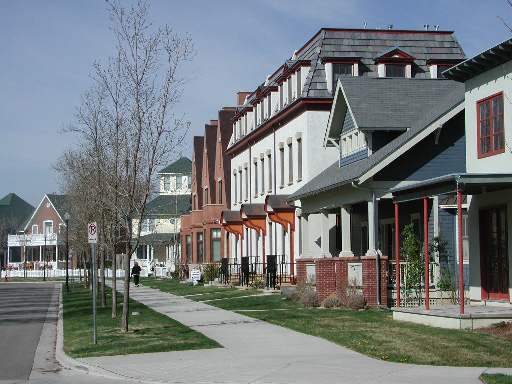
MUDS 4.1.5 The General Sub-Zone.
The General Sub-Zone has a denser and primarily residential urban fabric; mixed-use buildings are usually confined to certain corner locations. This sub-zone has a wide range of building types: single family detached houses, townhouses, apartment buildings, and more. Setbacks and street tree plantings are more variable. Streets typically define medium-sized blocks.
|
|
MUDS 4.1.6 The Edge Sub-Zone.
The Edge Sub-Zone is similar in density to conventional residential areas but differs by its superior connectivity. This sub-zone is more naturalistic in planting. Blocks may be large and more irregular to accommodate site conditions.
|
|
.jpg)
MUDS 4.1.7 The Civic Sub-Zone.
The Civic Sub-Zone consists of sites reserved for Civic Buildings and open space. This sub-zone includes land reserved for parks, greens, squares, plazas, pedestrian paths, and civic buildings.
|
|
.jpg)
Effective on: 1/1/1901