
Architectural Design Standards
September 23, 2009
ADS 5.6 Building Materials
| Residential | |||
| V | VI | VII | VIII |
ADS 5.6.1 Intent.
Buildings shall be attractive and durable. To ensure this, buildings shall be constructed of high-quality materials and require minimal maintenance.
Standard:
ADS 5.6.2 Allowed Materials.
Exterior building materials are classified according to their visual weight; exterior building materials shall be limited to the following:
| Allowed Exterior Materials | ||
| Heavy Materials | Medium Materials | Light Materials |
Site Plan Review Committee, the Planning Commission may approve other materials found to be comparable to the listed heavy materials (high-quality, durable) |
|
|
ADS 5.6.3 Synthetic Stone.
Synthetic stone, such as pre-manufactured fiberglass, cultured stone, or glass-fiber reinforced concrete is permitted, provided it is identical in appearance and of equal or greater durability to natural stone.
ADS 5.6.4 Location.
Heavy materials shall be located below medium and light materials; medium materials shall be located below light materials. Heavy materials should extend to grade.
ADS 5.6.5 Required Heavy Materials.
As outlined below, the total exterior wall area of each building elevation, excluding gables, windows, doors, and related trim, shall be heavy materials. The balance of exterior wall area shall be medium or light materials.
- Building Type V (Apartment Building):
- At least 40% of the total exterior wall area of each building elevation shall be heavy materials.
- Building Type VI (Townhouse):
- At least 40% of the average exterior wall area shall be heavy materials.
- Building elevations facing perimeter streets or established residential neighborhoods shall provide at least 40% heavy materials.
- Each building elevation shall provide at least 25% heavy materials.
- Material transitions at corners shall be made in accordance with these standards.
- Building Types VII and VIII (Duplexes):
- Unless approved as one of the City's adopted portfolio home designs, at a minimum, a wainscot of heavy materials shall be provided on each building elevation facing perimeter streets. In lieu of a continuous wainscot, alternative larger areas of heavy materials may be considered in locations conducive to the building architure.
ADS 5.6.6 Vertical Change of Materials.
A vertical change of materials shall occur at an interior corner or shall not occur within four (4) feet of an exterior corner.
ADS 5.6.7 Building Rehabilitation.
The rehabilitation of existing buildings shall comply with the requirements for exterior building materials. Use of alternate exterior materials for the rehabilitation of existing buildings is subject to approval by the Planning Commission and/or City Council upon recommendation of the Site Plan Review Committee.
ADS 5.6.8 Prohibited Materials.
Unless approved by the Site Plan Review Committee, exterior building materials shall not include the following:
| Prohibited Exterior Materials | ||
|
|
|
| Don’t Do This: | |
|
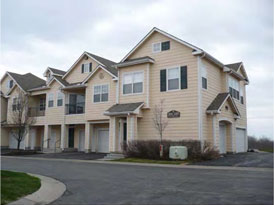
This building contains no heavy materials.
|
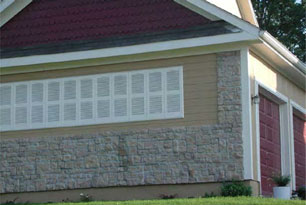
This building has brick that terminates within 4 feet of a corner.
|
| Do This: | |
|
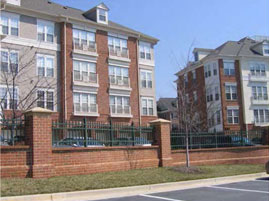
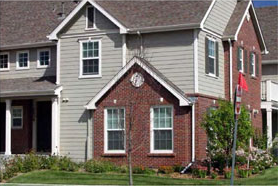
The vertical change in material correctly occurs at an interior corner; the siding is correctly located above the brick.
|
This vertical change in material is done correctly; it occurs at an interior corner.
|
|
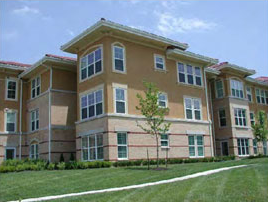
This apartment building correctly has stucco located above the stone.
|
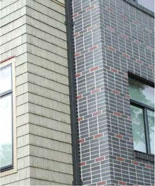
This vertical change in material is done correctly; it turns the corner and does not terminate with 4 feet of the corner.
|
Effective on: 1/1/1901